Can printed ‘skin’ help to heal burns without scars?
Inks created with a patient’s own cells might one day help the body regrow tissues
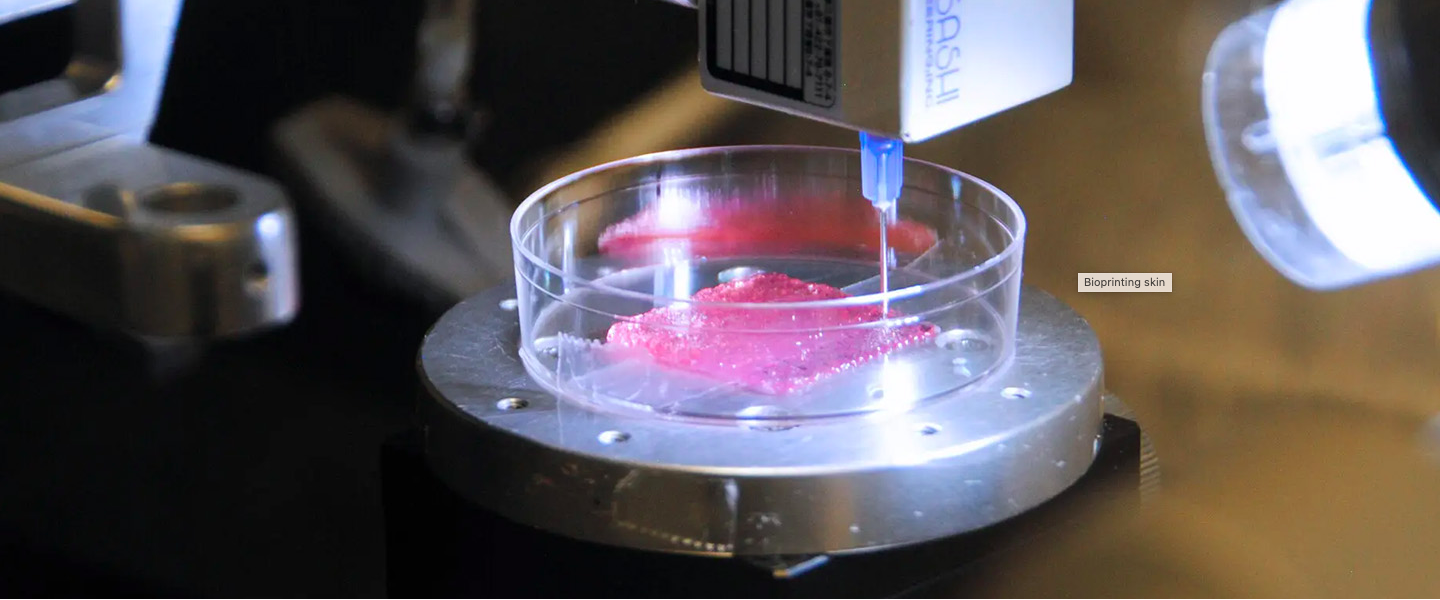
Cells suspended in a water-based gel make up the “ink” in this 3D printer.
Source: WAKE FOREST INSTITUTE FOR REGENERATIVE MEDICINE
Ahand touches a scalding hot plate, sharp pain erupts and immediately, the body gets to work. Damaged cells send out distress signals; immune cells rush in. As inflammation subsides, a coordinated repair process begins. Eventually, collagen fibers aligned in tight parallel rows will replace much of the damaged tissue. The wound heals, but it does not resemble normal skin.
For a small burn or cut, a scar is a small price to pay for rapid healing that mitigates the risk of infection. But in larger burn wounds, scarring can be devastating.
Each year, 11 million people require hospital care for burns. Long after the wounds have healed, scarring can cause complications. Unlike the random, basket-weave pattern that makes normal skin flexible and resilient, scar tissue tightens as it heals and, once mature, grows more slowly than surrounding skin. This can hinder movement and, in children with extensive burns, interfere with normal growth and development. Severe scars often lack hair follicles, sweat glands and nerve endings, reducing the ability to experience touch and to regulate body temperature.
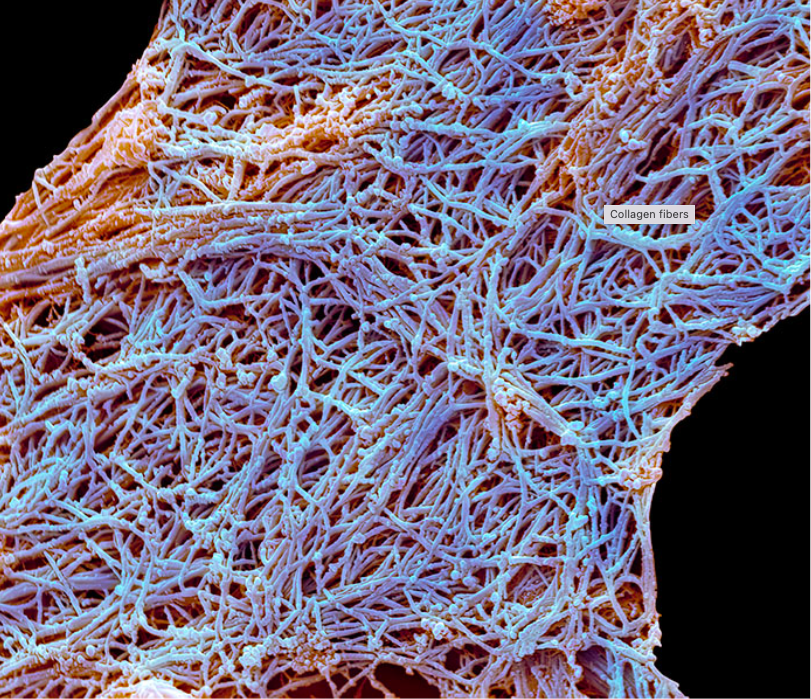
Normal skin contains collagen fibers that grow in a random basket-weave pattern shown here, while in scar tissue collagen fibers typically grow parallel to each other.
Source: STEVE GSCHMEISSNER / SCIENCE SOURCE
Scientists have long tried to develop ways to nudge the body to build healthy tissue instead of defaulting to emergency repair. In recent years, 3D bioprinting technology has emerged as one of the most promising approaches. By depositing patients’ own, pre-cultured skin cells suspended in an ink-like gel, these printers can create personalized skin substitutes, kickstarting the regeneration process. While it is early days, the technology is coming closer to clinical reality.
The key is accessing the body’s ability to rebuild, says wound healing researcher Johan Junker of Linköping University in Sweden. Our bodies, he says, “have been practicing this for millions of years, and we do it constantly, because our skin and every tissue in our body, more or less, always turns over. So why not just provide as good a set of building blocks as we can and then let nature do its thing?”