

How plant proteomics could safeguard Africa's food future
In Sub-Saharan Africa, crop yields are projected to decline by 5-17% by 2050, especially in major staples, partly due to climate change. How can farmers protect and enhance their yields to meet the nutritional needs of an expanding population? In the face of climate change, plant scientists are turning to proteomics, the largescale study of proteins, to understand and enhance drought-resilience in local crops.
Culturing a cure: new research sparks hope for women's vaginal health
In the human body, diversity in microbiomes is usually a good thing. For instance, a diverse gut microbiome is linked to better immune functioning and general health and well-being. But when it comes to the vagina, healthy microbiomes are dominated by Lactobacillus bacteria. The absence of beneficial lactobacilli and the presence of many types of anaerobic bacteria are hallmarks of bacterial vaginosis.
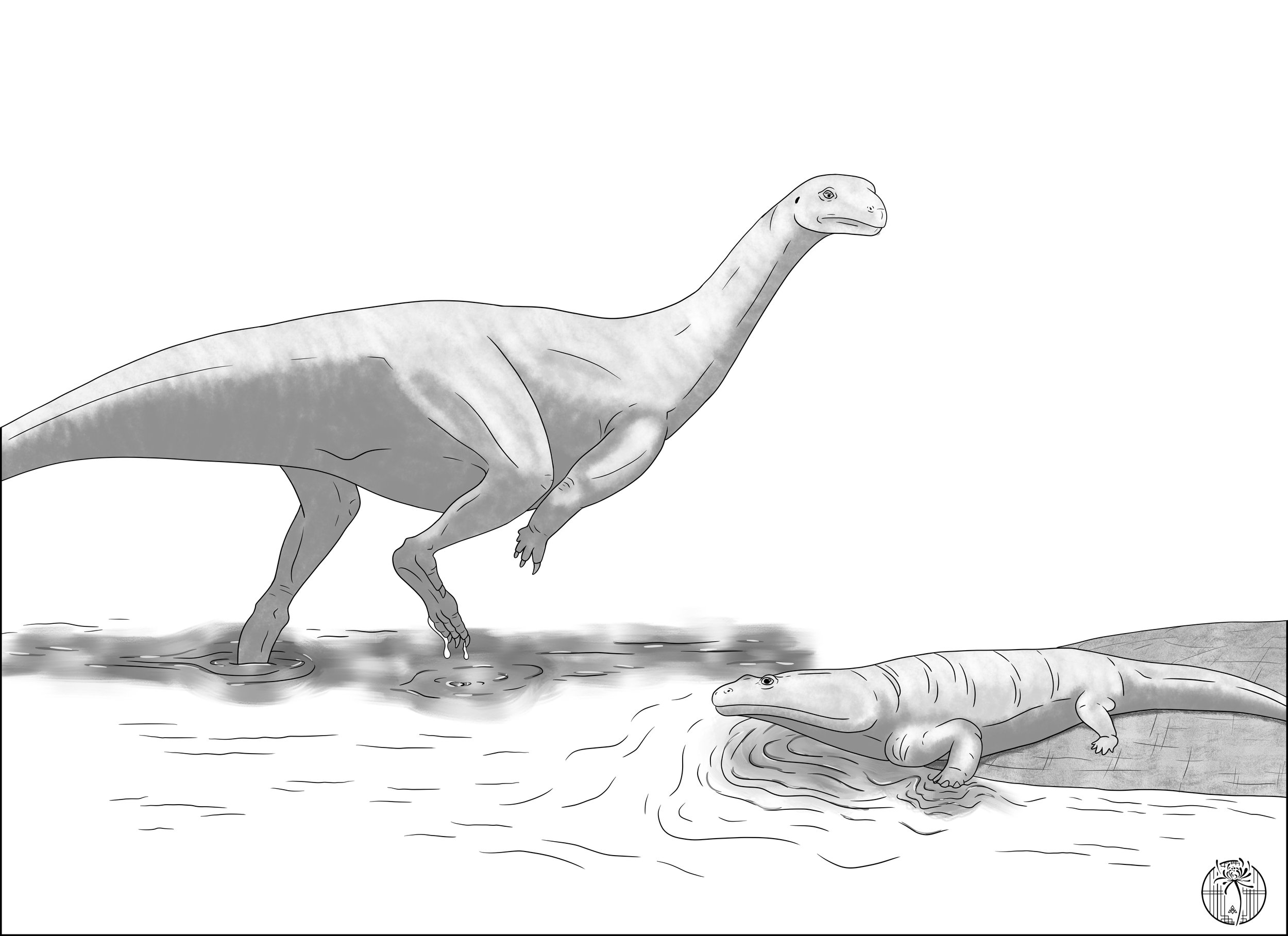
Unearthing Musankwa: International team finds new link in dinosaur evolution
Around 210 million years ago, a Musankwa sanyatiensis, a bipedal dinosaur with a long neck and sweeping tail, took its last steps in an unusually swampy region of southern Pangea. In the summer of 2018, scientists from Zimbabwe, South Africa, the UK, and the USA discovered its fossils on Spurwing Island in Lake Kariba, Zimbabwe. Among them were Paul Barrett from the Natural History Museum in London and Jonah Choiniere from the University of the Witwatersrand, Johannesburg.
Harnessing gender insights to tackle antimicrobial resistance
For half the year, rain falls in northern Ghana, and maize, rice, and cowpea green the plains. Spring to November/December is harvesting time. By May, households have begun to deplete their food stocks: May to August is known as the hunger season. Over the dry period, local farming communities rely on their livestock for their livelihoods and resilience, says Agnes Loriba, Ghana project manager at CARE International, an international humanitarian aid organisation.

Journeying with turtles
The ocean glints metallic blue under the evening sky. Gulls huddle together as the December light fades, and ghost crabs run lightly over white sand. It’s a peaceful scene for a human. But for baby loggerhead turtles, the KwaZulu-Natal beach is perilous.

One shot, better defence against cervical cancer
Women have a better shot at avoiding cervical cancer thanks to the single-dose human papillomavirus (HPV) vaccination, which has now been approved in South Africa.
The much-anticipated transition from the current two-vaccination strategy aligns with recent evidence-based World Health Organisation (WHO) recommendations.

There’s a plant for that
Under the unblinking gaze of the autumn sun, the colour drains from the woody shrubs (myrothamnus flabellifolia) growing on the bare rock of the mountain slopes. Some almost as tall as a human in summer, they shrink as the days shorten. Their fan-shaped leaves curl and close. As winter arrives, life quietly departs. Or does it?

Human-elephant coexistence in Zimbabwe: “We are part of them; they are part of us”
The world is facing a biodiversity crisis. In some countries, however, communities have adapted to coexisting with wildlife. With the advent of the first international conference on disaster risk management, co-hosted by the HSRC, the HSRC Review team visited the town of Victoria Falls in Zimbabwe, where people come into frequent contact with elephants. The experiences of these communities offer lessons for mutually beneficial coexistence. But the situation is more complex than it appears.